 There was a little girl
 Who had a little curl
 Right in the middle of her forehead;
 And when she was good
 She was very, very good,
 But when she was bad she was horrid.
 -Henry Wadsforth Longfellow, 19th C American poet
The verse persists. When the worry seeps out she is horrid, thinks Marie. Recently her supervisor reported that she had unkempt hair – this was during a bad spell at work. Whereas some people wear their hearts on their sleeves, Marie wears her worry on her head. Over the years Marie has invested in a lot of hair products in an attempt to control the curl. Recently she has invested in a lot of medication in an attempt to control the brain. Crazy hair crazy brain; she wonders what people see behind the curls, the ringlets, the frizz.
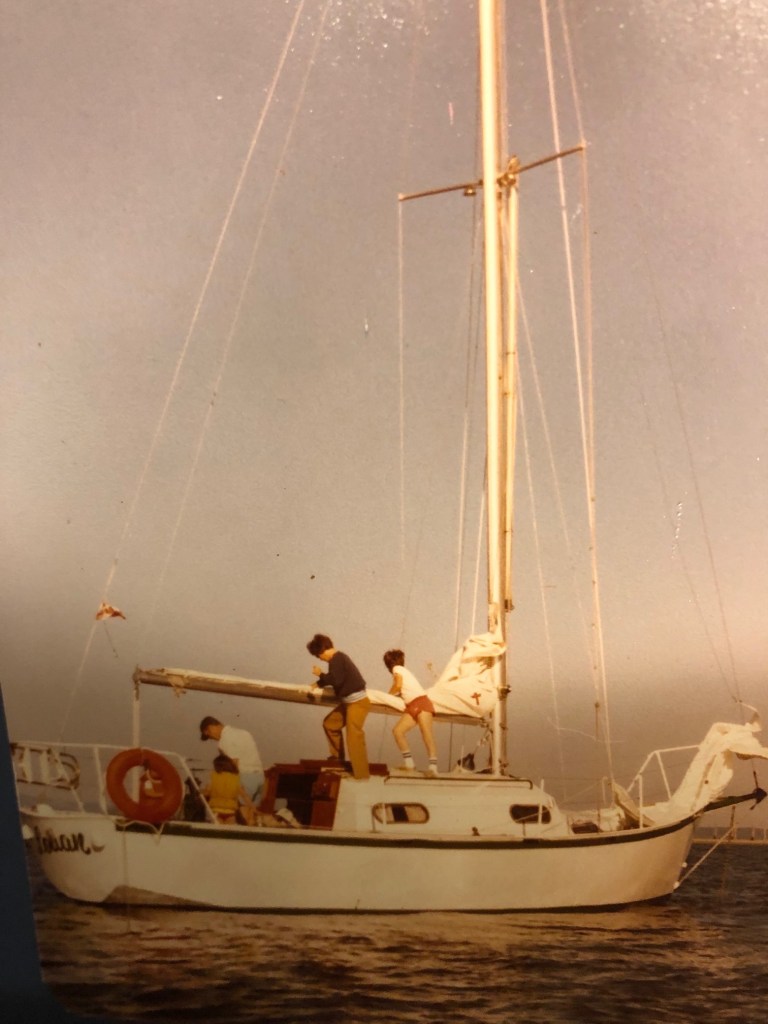
There is no reason for being crazy. She had a perfectly lovely middle-class childhood through the 1970s-80s in western Canada. As the middle child, Marie’s birth was evenly spaced out 4 years between the oldest and the youngest with a stay-at-home mom who dabbled in part-time work when her little sister started school and a military father who sailed as a hobby. Before the horses were the sailboats on which the family “swallowed and amazoned”[1] while cruising on weekends and summer holidays through the gulf islands. Marie kept journals of those trips that chronicled adventures on little islands, sometimes no more than a big rock with a scrubby tree, to which she and her sister rowed ashore in the dingy, sometimes joined by the cat or dog who needed some solid land to relieve themselves.
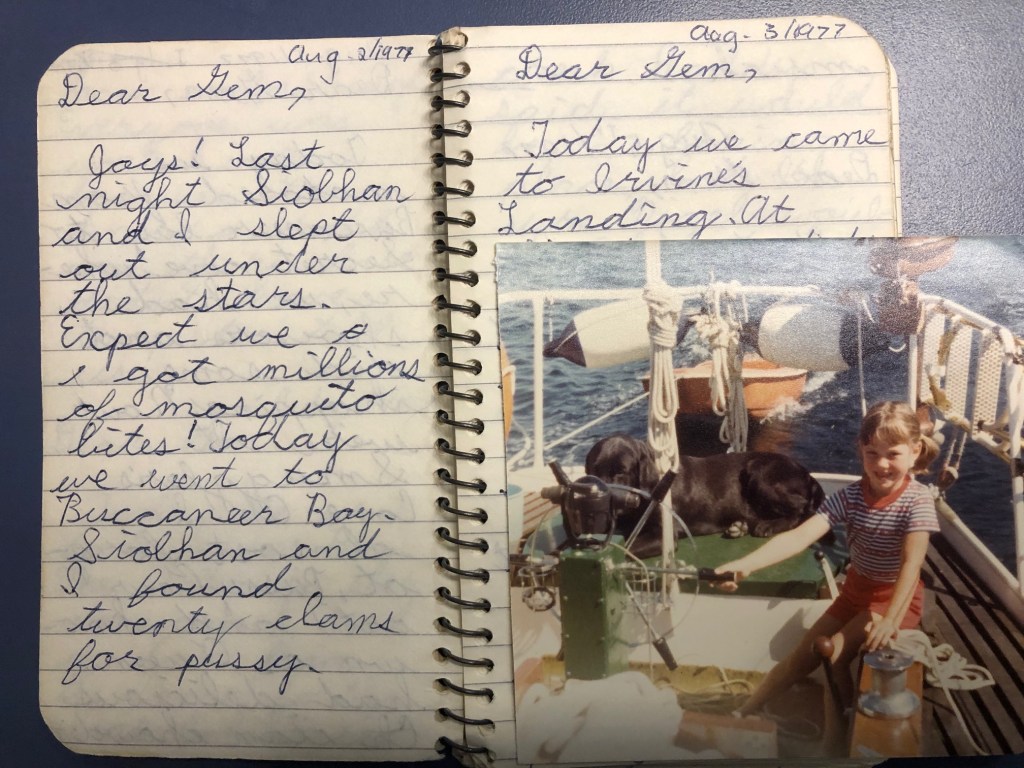
The cat was Pussy, a tortoiseshell who hunted birds and bunnies. The dog was Sam, a black Labrador Retriever, and hunter of snakes and garbage; both will live to old ages for pets, 12 and 19 respectively. Sam’s show name was Mambrich Canuck and his sleeping corner in the basement was adorned with show ribbons won by him and mom. Included in the pet tally, but not included on boating trips, was a series of goldfish won at school spring fairs and transported home in plastic bags to live in the glass bowl with its castle: Freda, Fifi, Freda 2, and Frederick. As with children of this era, the pets roamed freely outside during the day then made their way home in the evenings for dinner and bed. Pussy’s bed of choice was curled up under Marie’s covers; her own security blanket and teddy bear in one purring package. Marie didn’t mind that Pussy was a hunter as she kept her fur and paws feather and blood-free.
Marie would become vegetarian, the first stint of many, a few years later when she thought about the differences between horses and the cats and dogs deciding in an instant that the horses were cleaner creatures and that their plant-based diet rather than meat-based diet was a major factor. Her iron levels would suffer the rest of her life for this decision. But her brain was happy. The only time she considered eating meat again was during pregnancy when her doctor said she needed a serving of liver once a week for the health of her developing baby. “Okay”, she said with hesitation.. Dr. P recanted when he realized Marie’s literal nature would do it as prescribed. She should have known he was kidding when he chose such an extreme meat. Her husband got the joke though – he was like her mediator or translator when she was deep in what her family would start to call “Marie-land”, having her own understanding that often didn’t jive with “normal” human interactions.
Life was busy in the household with hours of unstructured outside play time as well as many structured activities. Marie’s brother followed their dad’s lead through Boy Scouts and military cadets while she and her sister signed up for dance, gymnastics, horseback riding, brownies, swimming, crafts, music lessons and other activities too numerous to remember. They were encouraged to sign up but with one caveat – no quitting midseason. Eventually the sisters left behind all activities except for horseback riding that had expanded from one lesson a week to leasing to owning. Their dad decided to redirect the money that was going into boarding into a mortgage on a hobby farm where the horses could be kept in the backyard.
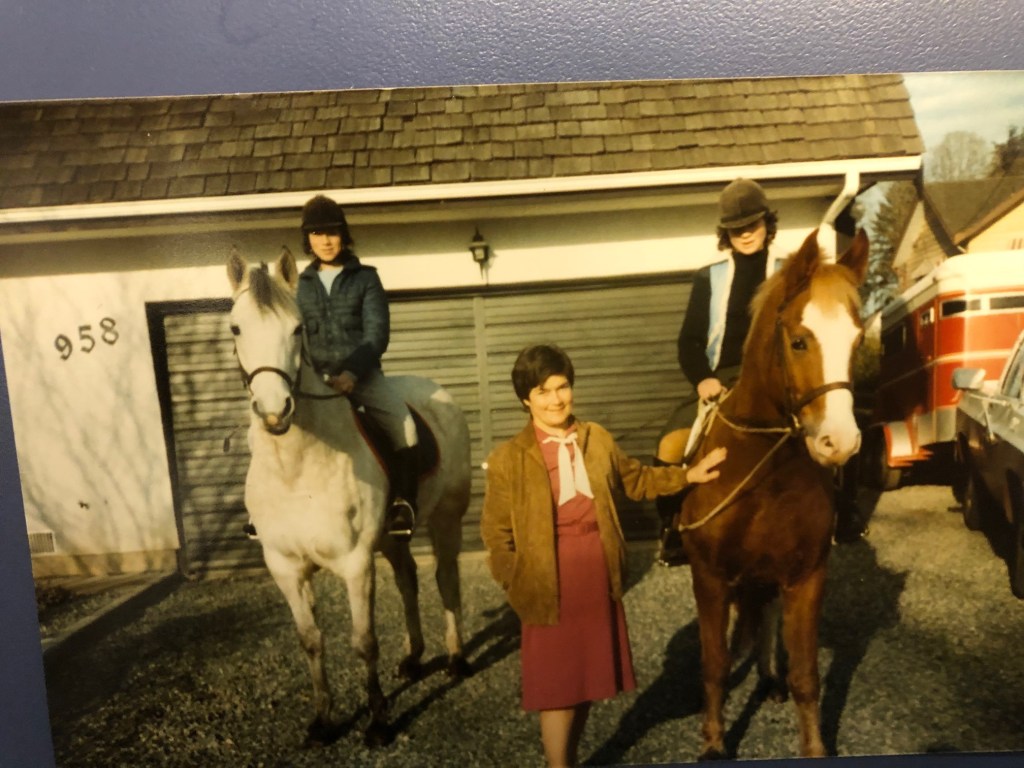
This was beyond a little girl’s dream of owning a pony, this was the real thing. Marie had only two types of clothing during those years: barn clothes and school clothes. The whole family, well, minus big brother who by this time was living his own dream as a young military officer, participated in the daily routines of horse care: feeding, turning out, mucking out, grooming, and riding. The riding was most days with trail rides that as an adult Marie shakes her head at as what now she’d consider risky riding in risky places – crossing highways to get to the beach, riding in dusk with no reflective gear on country roads, riding bareback and sometimes helmetless, galloping on the edges of farmers’ fields. Tangled up in the errant memories are slumber parties in the hayloft, organizing gymkhanas for the neighbourhood kids, horse shows that ran the gamut from down the road to across the border, Pony Club sleepover camps in the summer, and throwing dried road apples at each other in games of tag.
Marie remembers thinking as a teen about the teens who snuck out of their homes in the middle of the night and that she couldn’t imagine why she’d ever sneak out of her own house – she knew she had it good. Marie and her sister also knew to not get in trouble (parties, alcohol, curfews, poor grades, etc.) as the unspoken carrot or whip was that the horses were a privilege and they felt lucky to have them. The perspective of time reveals the privilege indeed – when Marie and her sister were being picked up by mom with the horse trailer and truck after school to go to riding lessons she learned years later that some of her peers had been walking home to unpredictable food supplies and dads who drank and beat whatever was handy – the wall, a kid. Those stories were more common but less visible than the horse trailering families in our community.
Those kids had more cause to turn out crazy than Marie did. She could find no cause for her madness from her childhood; it was all on her, the very very good and the horrid. She had been a worried child who developed into an anxious adult; she wonders if the worry could have been reversed if the cracks in her childhood demeanour had been repaired early enough. The cracks in reflection become more visible with pieces combed from the past and held up to the light similarly as an archeologist digs through the ruins.
Marie’s ruins and remnants of dreams, fantasies, imagination, and fragments of memory play out as scenes from a play. …to be continued with next blog submission
[1] A reference to the Swallows and Amazons book series by 20th C English writer, Arthur Ransome.
 Broken Bones, Broken Brain